The Price of a Shift: Generational Labour, Biopolitical Extraction, and the Domestic Subsidy of Capital
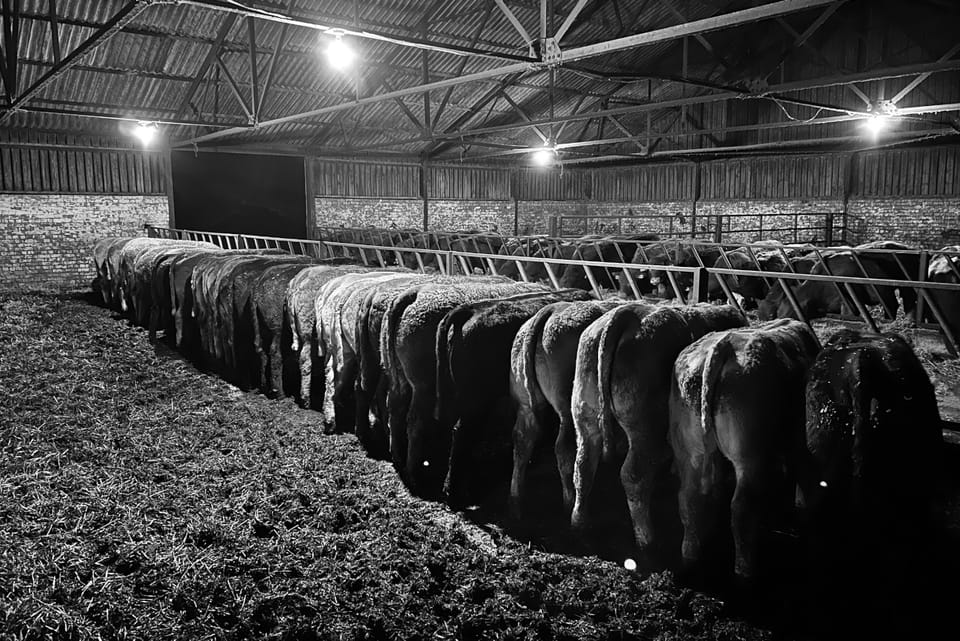
In the sanitised public imagination, rural labour is romanticised through the soft focus of pastoral tradition—an honest day's work tied to the land, the seasons, and community. But behind this ideological veil lies a brutal, unvarnished reality of advanced capitalist extraction. When a 58-year-old lifelong farmer—descended from a family of agriculturalists, carrying a BTEC Level 3 and a lifetime of embodied knowledge, with sixteen years of dedicated tenure on a single property—is compensated at the exact wage floor of someone brought in for a few months as an apprentice, we are looking at something far more calculated than mere underpayment. We are looking at structural theft.
The Erasure of a Lifetime: Generational Knowledge and Agrarian Devaluation
To understand the violence of this arrangement, one must look beyond a sixteen-year tenure on a single farm. He has farmed his entire life, rooted in an intergenerational lineage of agrarian labour. When you spend decades bound to the land, your expertise is not merely transactional; it is an entire mode of existence, learned through family, refined through practice, and absorbed physically over a lifetime.
Yet, modern capitalist enterprises treat this deep, generational mastery as weightless. By compressing a lifetime of agricultural skill and a formal technical qualification into the baseline wage of a short-term apprentice, the enterprise commits a profound institutional erasure. It treats a life dedicated to the land as interchangeable, disposable muscle.
The Hypocrisy of the Pedagogue
The structural violence of this arrangement is sharpened by the identity of the boss: a former lecturer and educator. Here, we witness the profound hypocrisy of institutional class privilege. Those who preach theory, social equity, or institutional ethics in the lecture hall often shed those principles entirely when they step into the role of an employer, reverting to nineteenth-century mechanisms of surplus extraction behind closed doors. The rhetoric of agricultural oversight masks a rigid hierarchy designed to extract maximum value from absolute loyalty.
Biopolitical Coercion: The Weaponisation of Agrarian Hazard
What happens when a worker cannot afford to withdraw their labour? Under conditions of modern economic precarity, biological survival is directly pitted against bodily destruction, weaponising the inherent dangers of the trade.
Agriculture is consistently ranked among the most hazardous industries—an unpredictable terrain of heavy machinery, demanding livestock handling, and extreme physical exertion where the human body is treated as the primary piece of infrastructure. For a 58-year-old worker managing pre-existing cardiac conditions like cardiomyopathy and a history of major and mini-strokes, twelve-hour physical shifts introduce acute, life-threatening physiological dangers. Sustained physical stress and heavy labour trigger dangerous spikes in blood pressure and heart rate, turning routine work into a continuous medical hazard.
Yet, industry culture normalises this physical breakdown, forcing workers to push past biological warning signs. Capital ceases to merely alienate labour here; it actively consumes the physical body. He is structurally trapped, gambling with his life every single day because the alternative is absolute destitution—relying on an arbitrary exit horizon (such as selling livestock to clear ledgers by April) as the only imagined route to freedom. The employer banks on this precarity, knowing that structural desperation silences dissent.
The Domestic Subsidy: Externalising the Costs of Survival
Crucially, a poverty wage does not reflect the true cost of production; it merely hides it by externalising the damage onto the home.
When a worker comes home drained to the bone, unable to sustain their own biological equilibrium, the burden of social reproduction shifts entirely onto the domestic sphere. The partner is forced to act as an unpaid emergency medical responder, caregiver, and physiological stabiliser—patching the broken body back together day after day so it can be fed back into the machinery of the farm the next morning.
Capitalism does not pay for the full cost of survival. Instead, it leeches off the unpaid domestic and emotional labour of the household, treating human life as an expendable raw material until an arbitrary debt ledger is finally cleared.
Member discussion